
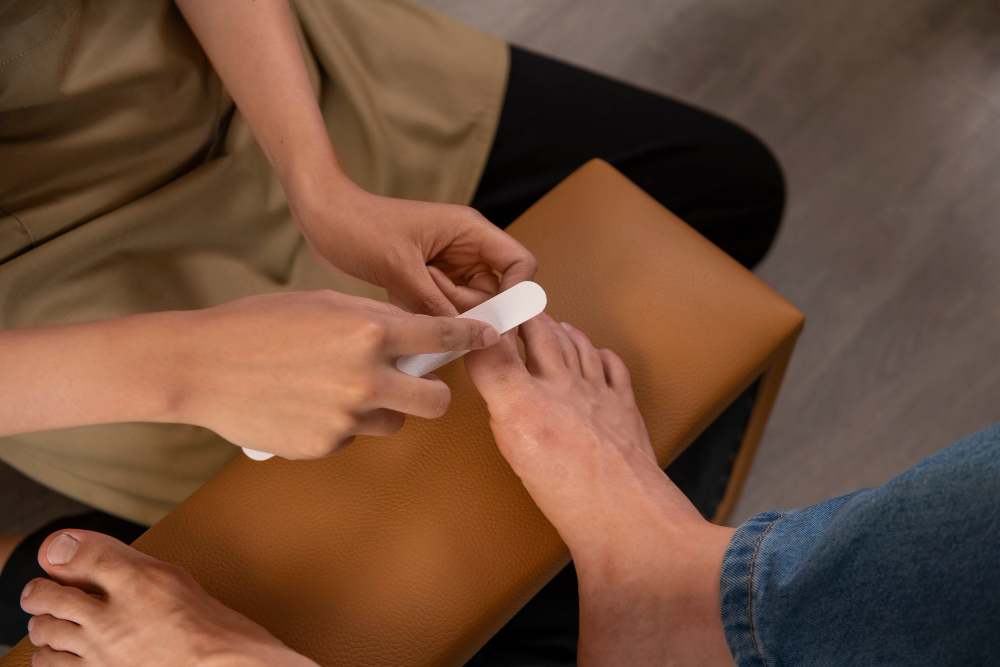
What Is Diabetic Foot Care?
Proper diabetic foot care means taking daily steps to keep your feet healthy if you have diabetes. Diabetes can lower blood flow and feeling in your feet. Because of this, small cuts or sores may go unnoticed and become serious. Good foot care helps prevent infections and other problems. According to the CDC, people with diabetes are more likely to have foot issues. Therefore, caring for your feet every day is very important.
Common Symptoms and Warning Signs
It is important to watch for early signs of foot problems. If you notice any of these, take action right away:
For example, even a small blister can turn into a big problem if ignored. So, check your feet daily.
Causes and Risk Factors for Diabetic Foot Problems
Many things can lead to foot problems in people with diabetes. High blood sugar can damage nerves and blood vessels. As a result, you may not feel pain or notice injuries. Poor blood flow also slows healing. Other risk factors include:
Because these risks add up, it is wise to stay alert and take steps to protect your feet.
Step-by-Step Daily Foot Care Routine
Following a daily routine can help prevent foot problems. Here is a simple guide on how to care for diabetic feet at home:
Because daily care is key, make this routine a habit.
Tips for Prevention and Early Detection
There are many ways to lower your risk of foot problems. Try these diabetic foot prevention tips:
Additionally, tell your doctor about any foot changes right away. Early action can prevent serious problems.
When to Seek Medical Help
Sometimes, home care is not enough. Seek medical help if you notice:
Because quick treatment can save your foot, do not wait to get help.
Treatment Options and Lifestyle Guidance
Treatment depends on the problem. For minor issues, your doctor may suggest special creams or dressings. In some cases, you may need antibiotics or minor surgery. For serious problems, hospital care may be needed. Along with treatment, healthy habits matter. Try to:
Because prevention is better than cure, stick to your daily routine and see your doctor often.
Conclusion: Take Steps for Healthy Feet
Proper diabetic foot care is vital for everyone with diabetes. With daily care, early detection, and healthy habits, you can prevent serious problems. Consult Ashok Krishna Hospital for personalized diabetic foot care advice.